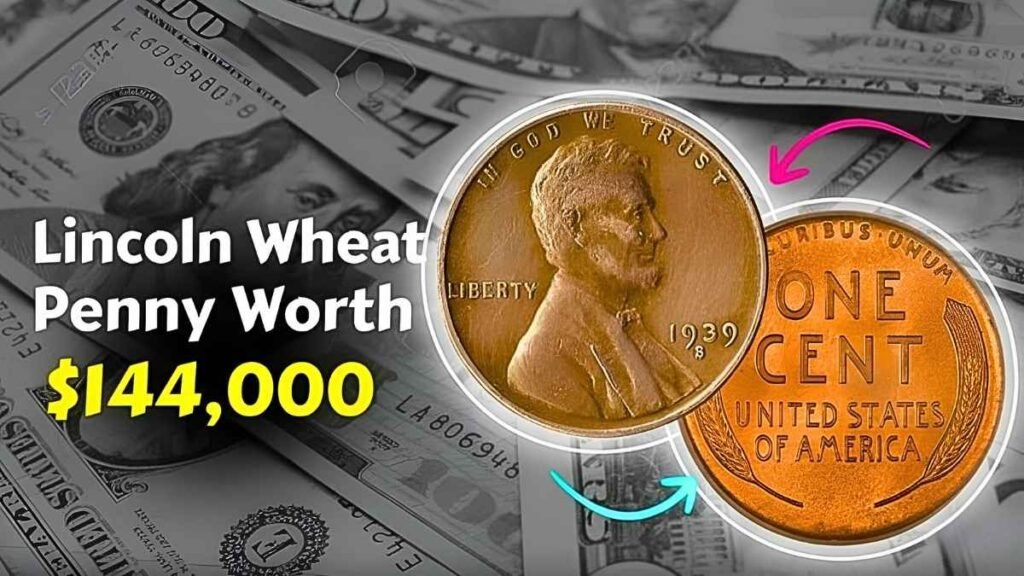

Old coins often sit quietly in drawers, piggy banks, or family collections without much attention. But sometimes, one small coin can be worth more than a luxury car or even a house deposit. One such example is the Lincoln Wheat Penny, a simple one-cent coin that has shocked collectors by selling for as much as $144,000.
This may sound unbelievable, especially because millions of these pennies were once used in daily life. However, a few rare versions of the Lincoln Wheat Penny are extremely valuable today. In this article, we will explain why some Lincoln Wheat Pennies are worth so much, how to identify them, and what collectors should know before buying or selling one.
Table of Contents
ToggleOverview Table: Lincoln Wheat Penny at a Glance
| Feature | Details |
|---|---|
| Coin Name | Lincoln Wheat Penny |
| Years Minted | 1909 to 1958 |
| Designed By | Victor D. Brenner |
| Material | Mostly copper |
| Rare High Value | Up to $144,000 |
| Key Value Factors | Year, mint mark, errors, condition |
| Popular Among | Coin collectors and investors |
What Is a Lincoln Wheat Penny?
The Lincoln Wheat Penny was first introduced in 1909 to celebrate the 100th birthday of Abraham Lincoln. It was the first U.S. coin to feature a real person instead of a symbolic image.
On the front side, the coin shows Lincoln’s portrait. On the back, it features two wheat stalks, which is why it is commonly called the “Wheat Penny.” These pennies were produced until 1958, after which the design was changed to the Lincoln Memorial.
At the time, these coins were ordinary money. People used them to buy candy, newspapers, or bus tickets. No one imagined that some of these pennies would one day become highly valuable collector items.
Why Is a Lincoln Wheat Penny Worth $144,000?
Not every Wheat Penny is valuable. In fact, most are worth only a few cents to a few dollars. So why would someone pay $144,000 for one?
The answer lies in rarity, errors, and condition.
Some Lincoln Wheat Pennies were made with minting mistakes, while others were produced in very small numbers. Over time, many were lost, damaged, or melted down. Today, only a few examples of certain rare pennies still exist, making them extremely desirable to collectors.
When a rare coin is also in excellent condition, its value can rise dramatically.
Key Factors That Decide the Value
1. Year of the Coin
Certain years are much more valuable than others. For example, early production years or years with low mint numbers often attract higher prices.
2. Mint Mark
The mint mark tells where the coin was made. Common mint marks include:
-
D for Denver
-
S for San Francisco
-
No mark usually means Philadelphia
Some rare combinations of year and mint mark can push the value very high.
3. Minting Errors
Coins with errors are especially attractive to collectors. These errors may include:
-
Wrong metal used
-
Double stamping
-
Missing details
-
Off-center designs
Error coins are rare by nature, which makes them valuable.
4. Condition (Grade)
A coin that looks almost new, with clear details and minimal wear, is far more valuable than a worn-out one. Coins are graded on a scale, and high-grade coins can be worth many times more than average ones.
Famous High-Value Lincoln Wheat Pennies
Some Wheat Pennies have become famous in the coin world. A few examples include:
-
1943 Copper Wheat Penny: Most pennies in 1943 were made from steel due to wartime metal shortages. A few were accidentally made from copper, and these are among the most valuable pennies ever found.
-
1909-S VDB Penny: This coin features the designer’s initials and was produced in limited numbers, making it highly collectible.
Coins like these, when found in top condition, have reached prices close to or even above $144,000.
सम्बंधित ख़बरें





How to Check If You Have a Valuable Wheat Penny
If you have old pennies at home, it is worth taking a closer look. Here are some simple steps:
-
Check the year on the coin.
-
Look for a mint mark below the year.
-
Examine the color and metal of the coin.
-
Inspect for errors, such as double letters or unusual designs.
-
Avoid cleaning the coin, as this can reduce its value.
-
Consult a professional coin expert if you think the coin may be rare.
Even if your penny is not worth $144,000, it may still have collectible value.
Why Collectors Love Lincoln Wheat Pennies
Lincoln Wheat Pennies are popular because they combine history, design, and mystery. Each coin tells a story about the time it was made, from economic changes to wartime decisions.
They are also a favorite among beginners because many Wheat Pennies are still affordable. At the same time, rare examples offer serious investment potential, which attracts experienced collectors as well.
Should You Sell or Keep a Rare Wheat Penny?
If you believe you own a rare Lincoln Wheat Penny, the decision to sell or keep it depends on your goals.
-
Selling may make sense if you want quick financial benefit.
-
Keeping the coin may be better if you believe its value will increase over time or if it has sentimental value.
Either way, proper storage and professional evaluation are very important.
Future Value Outlook
Interest in rare coins continues to grow. As fewer high-quality Lincoln Wheat Pennies remain available, demand may rise further. This means that well-preserved rare coins could become even more valuable in the future.
Collectors who understand the market and take good care of their coins are often rewarded in the long run.
Frequently Asked Questions (FAQs)
1. Are all Lincoln Wheat Pennies valuable?
No, most Lincoln Wheat Pennies are common and worth only a small amount. Only rare years, errors, and high-condition coins are valuable.
2. How can I tell if my penny is rare?
Check the year, mint mark, metal type, and condition. If something looks unusual, get it checked by a coin expert.
3. Does cleaning a Wheat Penny increase its value?
No, cleaning usually lowers the value. Collectors prefer coins in their original condition.
4. Can I still find valuable Wheat Pennies in circulation?
It is rare, but possible. Most valuable ones are already in collections, but discoveries still happen.
5. Is a Lincoln Wheat Penny a good investment?
Rare and high-quality Wheat Pennies can be a good long-term investment, especially for collectors who understand the market.
Final Thoughts
The idea that a simple one-cent coin could be worth $144,000 is truly fascinating. The Lincoln Wheat Penny proves that history, rarity, and condition can turn everyday objects into valuable treasures.
If you have old coins at home, it may be worth taking a closer look. You never know—one small penny could hold a big surprise.